Endless Sights: Kubo and the Two Strings
Let me just preface this review by professing my undying love for animation, stop-motion included. I firmly believe it to be a medium in itself that should not be perceived as being only for kids (Although kids' media is often used as an excuse to not produce anything worthwhile. Kids especially need quality media! This is a whole different can of worms that I won't get into right now). Many directors and production companies fortunately take it very seriously and create incredible work that really showcase what animation is capable of, Laika included (I adore their debut, Coraline).
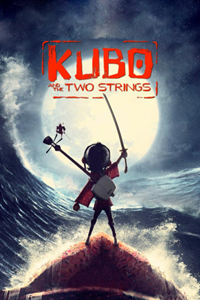
Kubo and the Two Strings (2016)
Kubo and the Two Strings is the 4th full length feature film from stop-motion production studio Laika, and co-founder, CEO, and lead-animator Travis Knight in his directorial debut (don't google him or his old man). It boasts a cast of high profile actors and features a story of celestial, familial drama set in feudal Japan, drawing inspiration from certain aspects of its culture and mythology.
The production design is gorgeous, charming, and instantly recognizable as Laika. Wonderful textures of autumnal reds and indigo blues have been folded with great care into familiar shapes that evoke the blissful air from the Land of the Rising Sun. I do not doubt for a second the craftsmanship put into this film. A beautiful paper crane is made, but the creases and tears in its fundamental material is showing.
The tone is very uneven and misaligned. Scenes with heavy and profound subjects of loss and childhood are placed next to slapstick comedy and quippy dialogue in lieu of moments of character interaction. The pacing and introduction of characters are only made to serve the plot, and it is at once apparent what purpose they serve.
There is no sense of place after the initial opening sequence when the quest begins. They move from set piece to set piece and widely different locations in the abstraction of the Far Lands, seemingly at random. Again, it exists only to serve the plot, and the locations of the otherwise barren Far Lands have no resemblance to the sprawling landscapes of Japan we were just introduced to.
The plot is no doubt all in service of allegory for Kubo's (Art Parkinson) psychological condition, and his quest is really about him dealing with the pains of growing up without knowing his father (Matthew McConaughey) and losing his left eye to his grandfather (Ralph Fiennes), but it is so apparent (no pun intended). Memory is also a big theme here, with his mother (Charlize Theron) losing part of herself after suffering head trauma and the stories of his father's exploits keeping him grounded and empathetic to other people. This sets up the central conflict between him and his grandfather, a heavenly being known as the Moon King, who wants him to lose his mortal failings (his sight; his capacity to see and empathize with other people) to instead live with him in a perfectly cold world among the stars.
I get it. It's a good story to tell kids and feels like a Japanese folktale (albeit very superficially), I just wish it had more subtlety in handling its subjects and didn't spell it out in the dialogue all the time.
Which brings me to my final ick, which is 100% a strange pet peeve of mine, but the dialogue is so horribly American. For a movie set in feudal Japan, I would prefer it not sounding so modern and not utilizing the setting and its culture more. The referencing of certain cultural and mythological concepts is very minimal and, to me, feels like wearing the skin of a culture that you haven't delved all that much into. I get that it's a strange and unreasonably subjective criticism coming from a white European Japanophile, but if I feel like it's very surface level, then I wonder how others would.
Places to watch:
JustWatch